Why are people talking about black holes?
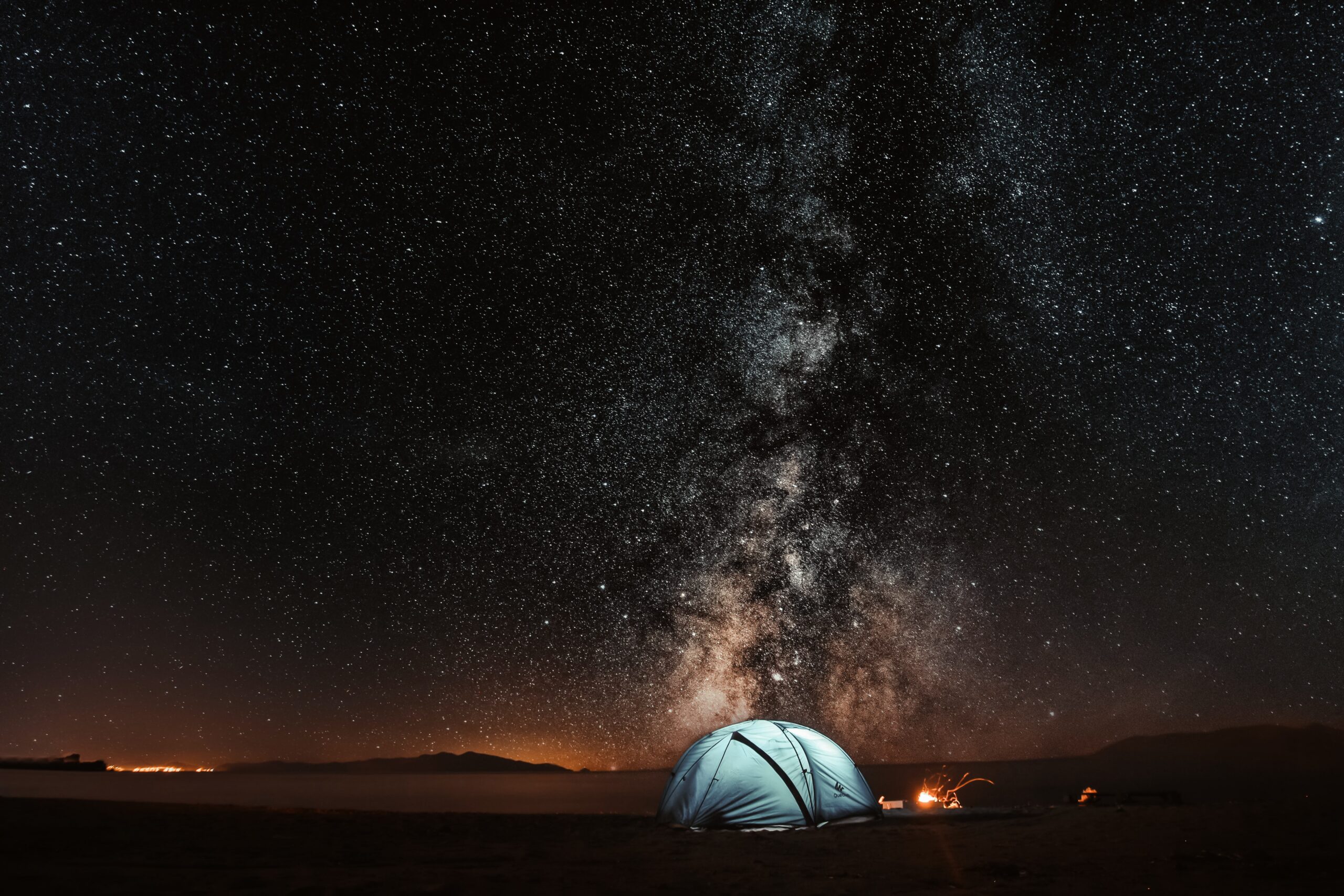
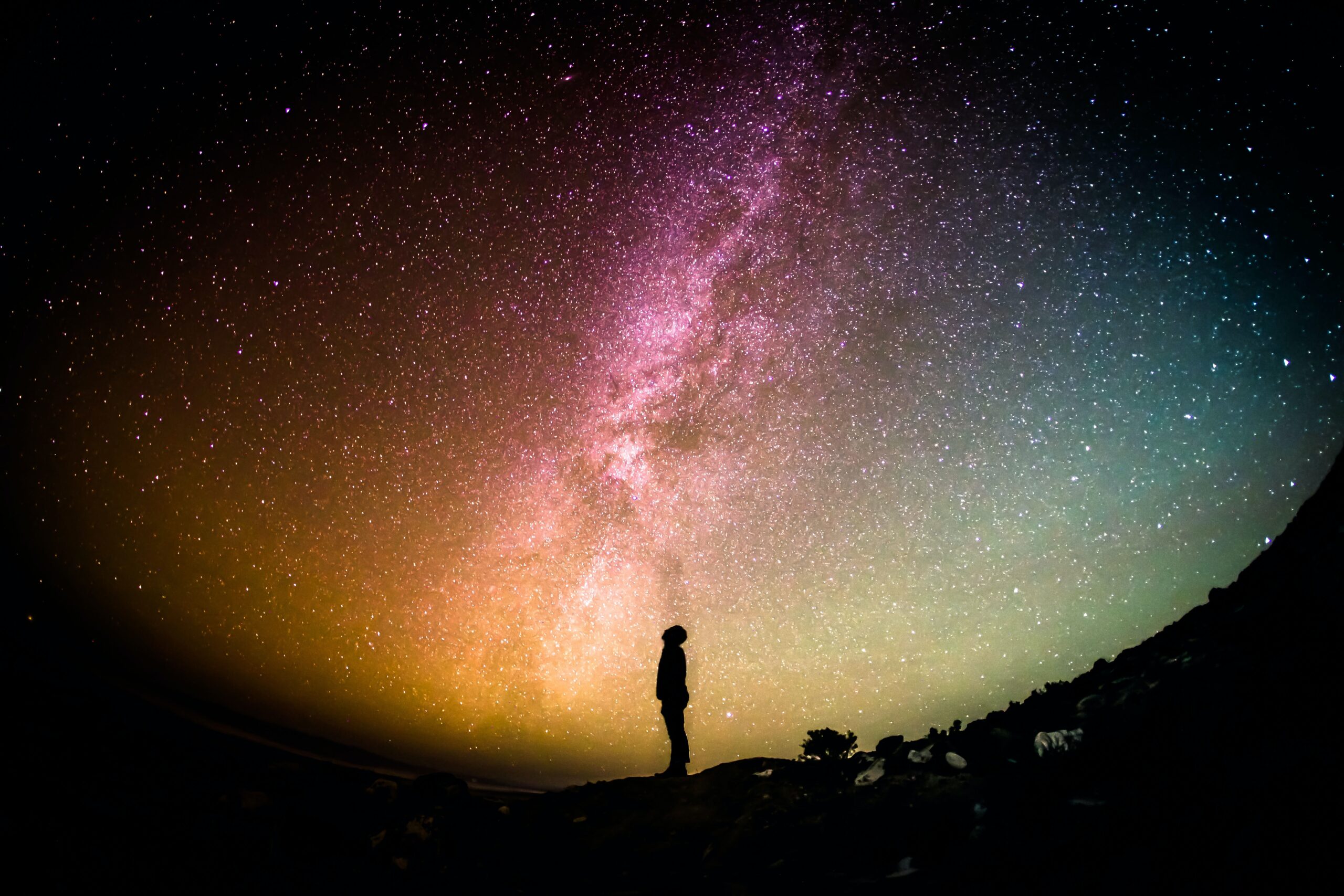
I was in the Incan Altiplano territory of Peru, one of the highest altitudes in the world where you can enjoy the sky view without the city’s light contamination. It was there that I saw the most astonishing sky I have ever seen. Similar to the planetarium I used to visit as child, the sky was projected on the entire vault above me.
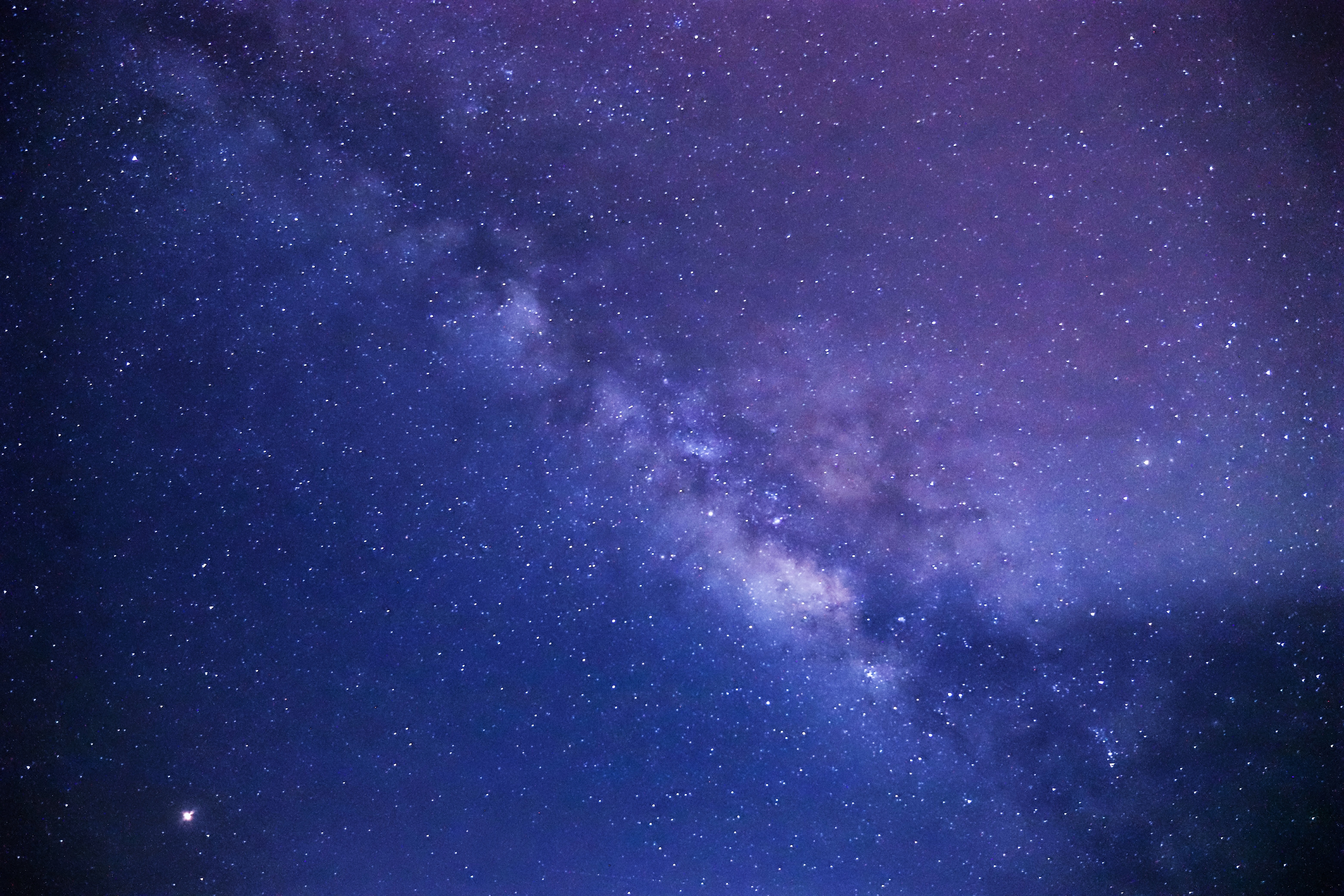
Only that this time it was so real and so vast that I had to turn my head from left to right to see the entire Milky Way galaxy. And the thousands of stars were so magnificent that I could not take my eyes off of them. Just like scientists cannot take their eyes off of space; looking for clues of the existence of black holes, how they look, and why they exist.
Remarkably, they found that black holes that were predicted approximately a century earlier do exist. Indeed, they have been inhabiting the universe since its early beginning.
What are those precious clues that people are hunting for? Those signs came in the form of amazing astronomical observations, matched with conclusions from physics.
Let’s see what those clues actually are, what they are telling us in respect to black holes, and why ultimately black holes have become “in vogue”.

How did a supermassive black hole appear in our galaxy?
Why people are talking about black holes is in part due to the fact that we have a huge one at home, at the center of our Milky Way galaxy.
Let me walk you through it. Sagittarius A* is a region at the center of our galaxy that has a colossal mass of about 4 million times the Sun’s mass. This is what I mean. Its mass in pounds is equivalent to a seven with thirty-six zeros after it. But wait there is more; this mass is packed into a region with a diameter only about one hundred times the Sun’s diameter.
That gargantuan matter congested in such a tiny region makes Sagittarius A* a supermassive black hole.
And wait, the best part is coming in how black holes emerge. When a gigantic star dies it collapses, and if it has at least three times the Sun’s mass then this event can result in a black hole. Let me break this down for you. A black hole is a region in space where a huge amount of mass is compressed into a relatively tiny space, so that the gravity there is incredibly strong.
And what’s more, when the squeezed mass is equal to or more than 1 million times the Sun’s mass, it would result in a supermassive black hole. All in all, this is how Sagittarius A* took shape in our galaxy.
Excursion:
Gravity is the force keeping you “stuck” to the ground and allows objects to fall. This is important in that, it not only draws on mass, but light as well. Why is gravity important when talking about black holes? Because they contain a huge amount of mass so that the gravity can forcefully pull in any matter entering a black hole. The result? When light comes into black holes it will never escape, so that black holes become invisible to our eyes.
Do black holes actually exist?
You might think to yourself, if black holes are invisible to the human eye, how can scientists be sure they exist?
I will explain it for you. Although we cannot directly see black holes, their presence can still be inferred by checking how they affect the matter around them. For instance, it is known that supermassive black holes generate Herculean gravity, which accelerates the stars and gas clouds around them. The trick is that these accelerated stellar bodies emit X-rays, which are high-energy light that telescopes can detect. Bingo!
It is important here to note that stars that are not close to black holes do not behave in this way. Thus, such an observation is a clue meaning that there is a black hole nearby.
You may be wondering if X-rays are the only emission that stars can project. In fact, depending on the star’s condition, it can expel other kinds of detectable dischargers. In addition, stars can also present different sorts of trajectories depending on how close or how they interact with a black hole.
These star reactions are some of the clues that people are looking for to confirm the presence of black holes, and they can be recorded. For instance, please read the following examples of star-black hole interactions detected and observed by telescopes and satellites.
Clue 1 that black holes exist
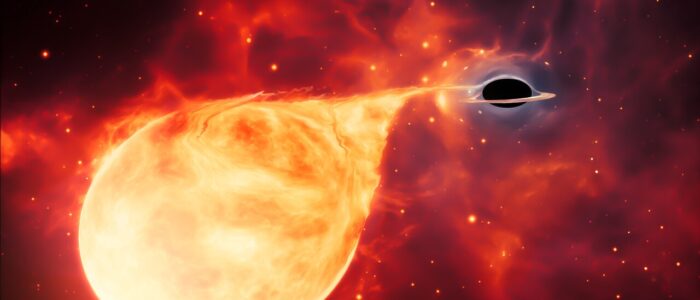
The incredible destiny of a star skimming a black hole was viewed by the Transiting Exoplanet Survey Satellite (TESS) and the Swift mission for the first time. They observed how a star tore when it came too close to a black hole. But that is not all, a part of the destroyed star escaped into space and the remaining encircled the black hole. This dramatic phenomenon is called Tidal Disruption Event, and it was first detected by twenty robotic telescopes located around the world, which were coordinated with TESS.
Click here to see the animation of the star torn by a black hole. https://www.youtube.com/watch?v=85tdoDt1Qh0&feature=emb_logo
Let me guess. You may be thinking that in the animation above you cannot see a black hole. You are right, nobody can see what a black hole looks like, but we know they are there seeing how stellar bodies interact with them, just like the torn star.
Curiously, this unique event happened in 2019 in a galaxy far far away. Similar astonishing events occur in our Milky Way galaxy only once every 10, 000 to 1, 000, 000 years. Thus, it is wise to have telescopes and satellites ready to capture such episodes, just in case.
Excursion:
The birth of black holes can be accompanied by light’s emissions as bright as many billions of the Sun’s light. And guess what. The Swift mission is a spacecraft able to detect such emissions called gamma-rays. As a matter of fact, these gamma-rays can come from other burns or explosions. Click here to see Swift’s images. https://www.nasa.gov/mission_pages/swift/images/index.html

This work is licensed under a Creative Commons Attribution 2.0 Generic License.
Clue 2 that black holes exist
And I am not stopping here. Let me show you a recent finding in which a star was orbiting near Sagittarius A*, a region at the center of our galaxy. And there is a catch here. The star called S2 followed a pathway in form of an imaginary rosette.
Let me explain why this is relevant. The rosette type trajectory is similar to a Schwarzschild precession. This precession describes the bound orbits of an object around another one and it is a prediction from Einstein’s Theory of General Relativity.
Here’s how it works. Having detected the Schwarzschild precession in the orbit of the star S2, close to the galactic center near Sagittarius A*, confirms that “… Sagittarius A*must be a supermassive black hole”, according to Reinhard Genzel director of the Max-Plank Institute.
Click here to see an artistic representation of the rosette type star S2’s orbit near Sagittarius A*. https://www.space.com/milky-way-supermassive-black-hole-star-dance-einstein-test.html?jwsource=cl
Excursion: Now, this is important. In order to follow the star S2’s orbit, researchers used the Very Large Telescope. It is form from four telescopes, that can work separately or as one powerful bigger telescope. Impressively, since S2 completes an orbit every sixteen years, it was necessary to follow it for 27 years to collect enough data to reveal its Schwarzschild precession described above. Click here to see the Very Large Telescope in the middle of the Chilean desert, “possibly one of the driest places on Earth,” on the video-report of the European Southern Observatory. https://www.youtube.com/watch?v=LY_zLR9kE1w&feature=youtu.be
Why are black holes “in vogue”?

Finally, last but not least, one of the reasons why black holes have become so popular these days, is because the prediction of their existence became undeniably true. And who does not like accomplished promises?
Let me elaborate. The prediction of the occurrence of black holes was first derived from Einstein’s Theory of General Relativity more than a century ago. Since then, researchers have inferred the occurrence of black holes through important astronomical observations and theoretical work.
But here comes the biggest part. Last year three researchers won the Nobel Prize in Physics for the discovery that black holes are a prediction of Einstein’s Theory, and that we have a supermassive black hole at the center of our Milky Way galaxy. Let me next tell you how the promise came true.
The promise
Here is how Einstein’s theory predicted the occurrence of black holes. Give me the green light to hand you some basics about such a theory. This is a mathematical model combining spatial dimensions with temporal dimension (space-time). If we add the effect of gravity to the model, then we will have a curved space-time, distorted for the distribution of matter and energy in the universe. It is important here to know that this model is represented mathematically for a set of equations. I know that it is a lot to take in, but bear with me.
Now, here comes the prediction. These equations were solved by German Karl Schwarzschild, who published his results in 1916, when Schwarzschild was at the Russian front in the middle of the World War I. Notably, his solution showed that if the mass of a star collapses in a very tiny region, then the gravity on its surface would be so enormous that nothing, even light, could escape from it. Currently, we call such a region a “black hole”. And this is how the idea that “black holes can form” was derived from Einstein’s Theory of General Relativity.
Excursion:
Did you know that even Einstein doubted that black holes could exist in real life? Indeed, for a long time many physicists were skeptic about black holes. Sadly Schwarzschild died a short time after publishing his work, due to a disease contracted at the front during the war.
The promise’s fulfillment
Here is the bottom line. So far we have discussed the conjecture that black holes could occur in the universe. This “could” became a “can”through the years. What seemed to be an eccentricity derived from a mathematical model for some experts became an undeniable truth. This happened thanks to breathtaking theoretical work and astronomical observations that have been proving the point.
And the greatest part is here. Roger Penrose, a mathematician, won the Nobel Prize in Physics 2020 for proving that under certain circumstances a collapse of matter can lead to the appearance of a black hole. And that ultimately black holes are a prediction of Einstein’s Theory of General Relativity.
The Prize was shared with two other scientists, Reinhard Genzel and Andrea Ghez, who demonstrated that there is a supermassive black hole at the center of our galaxy. How were they able to do that? Well, they looked into the stars.
What I mean is, they independently monitored the trajectory of stars around the center of the Milky Way galaxy, where the Sagittarius A* region, a candidate for black hole, is supposed to be. Then, they came up with the following astonishing conclusion: the way in which these stars behaved show that Sagittarius A* is indeed a supermassive black hole.
And “this” is how the black hole prediction came true.
Excursion:
Just like telescopes are tools helping scientists to obtain data from the universe, mathematics is the tool for some researchers. Penrose, one of the Nobel Prize winners, invented his own mathematical tool. Armed with such a tool, he also revealed that at the center of a black hole there is a singularity, meaning there is an object with infinite density. This singularity shocks the current accepted physics’ laws, so that reconciling such a finding with those laws is one of the biggest current open problems in physics. Surprisingly and adversarially, Einstein published a paper in 1939, in which he discussed Karl Schwarzschild’s solution. The purpose of his paper was to show “…why the ‘Schwarzschild singularities’ do not exist in physical reality.” https://www.jstor.org/stable/1968902?seq=1#metadata_info_tab_contents
Allow me a final comment. Walking at night, I think about which celestial body will be able to be seen next. And what new knowledge and joy it will bring to our lives. Just in case, keep watching. After all, the sky is available to all of us. We only have to tilt our heads up and see it. But in case you want to watch closer, click here to see what is going on in deep space. https://blogs.nasa.gov/Watch_the_Skies/