
Hidden Lives: Users of Illegal Opioids on the Mexico-U.S.A. Border.
By Elisa Nuñez Acosta
Consumption of illegal opioids on the Mexico – U.S. border is higher than in the rest of Mexico and is a hidden reality of many undeserved people in pain. “… at some point traumas that I could not overcome appear…,” said a drug user. “… and heroin has helped me to get them out from me, to face them, to anesthetize pain […] and to get courage to move on,” (Fleiz, 2019).
Social conditions and health issues related to opioid consumption are very apparent on the border. Challenging childhood, social inequity, drug consumption, discrimination, addiction, and related deaths are common experiences of many opioid users’ unseen by society and authorities. This context not only impedes drug users’ emotional and physical recovery but worsen their situation.
Wasteland and abandoned houses in Tijuana, San Luis Rio Colorado and Ciudad Juarez are the meeting points of opioid consumers on the border. Some drug users are migrants or deported people from the U.S. The street is home for most of them. Lack of adequate nutrition, skin infections and wounds are visible on their bodies, caused by badly performed injections and use of injectable opioids such as heroine. Ultimately serious lesions give rise to amputations and loss of extremities, (Fleiz, 2019).
Some drug consumers struggle with withdrawal syndrome since they were newborns, caused by their mother’s drug consumption during pregnancy. Others get drugs from family members, as a user said “she [mom] injected me for the first time, yes, I was 10 years old…,” (Fleiz, 2019).
Young users normally start using heroine at age 20, while some others start as young as seven, (Fleiz, 2019).
“(Traumas) are difficult to get out of without psychological attention, add that to the things that come when you grow up such as no job opportunities or housing,” explains Alfonso Chavez, Director of the Harm Reduction program by PrevenCasa, a civil association on the border.
Approximately 342 heroin users had posttraumatic stress, 78 tried to take their lives and some others showed emotional distress, according to research using 600 users on the border in a peer review journal by Fleiz from the National Institute of Psychiatry in Mexico, which is not yet published.
Sexual rape by family members or others, being witness of a murder and being in the middle of drug traffickers’ disputes are some of the daily experiences of many users since they were as young as 4 years old, said Fleiz in an interview.
These people find relief in consuming drugs such as opioids. Nowadays heroin is mixed with fentanyl, an opioid 100 times more potent than heroin and highly addictive. Users were not aware of the presence of fentanyl in their doses for a while. Nowadays more people are cognizant and ask for fentanyl.
Approximately 78 out of 80 drug samples, taken from residues found in users’ drug paraphernalia, had fentanyl, said Fleiz. Users reported more overdoses derived from fentanyl consumption.
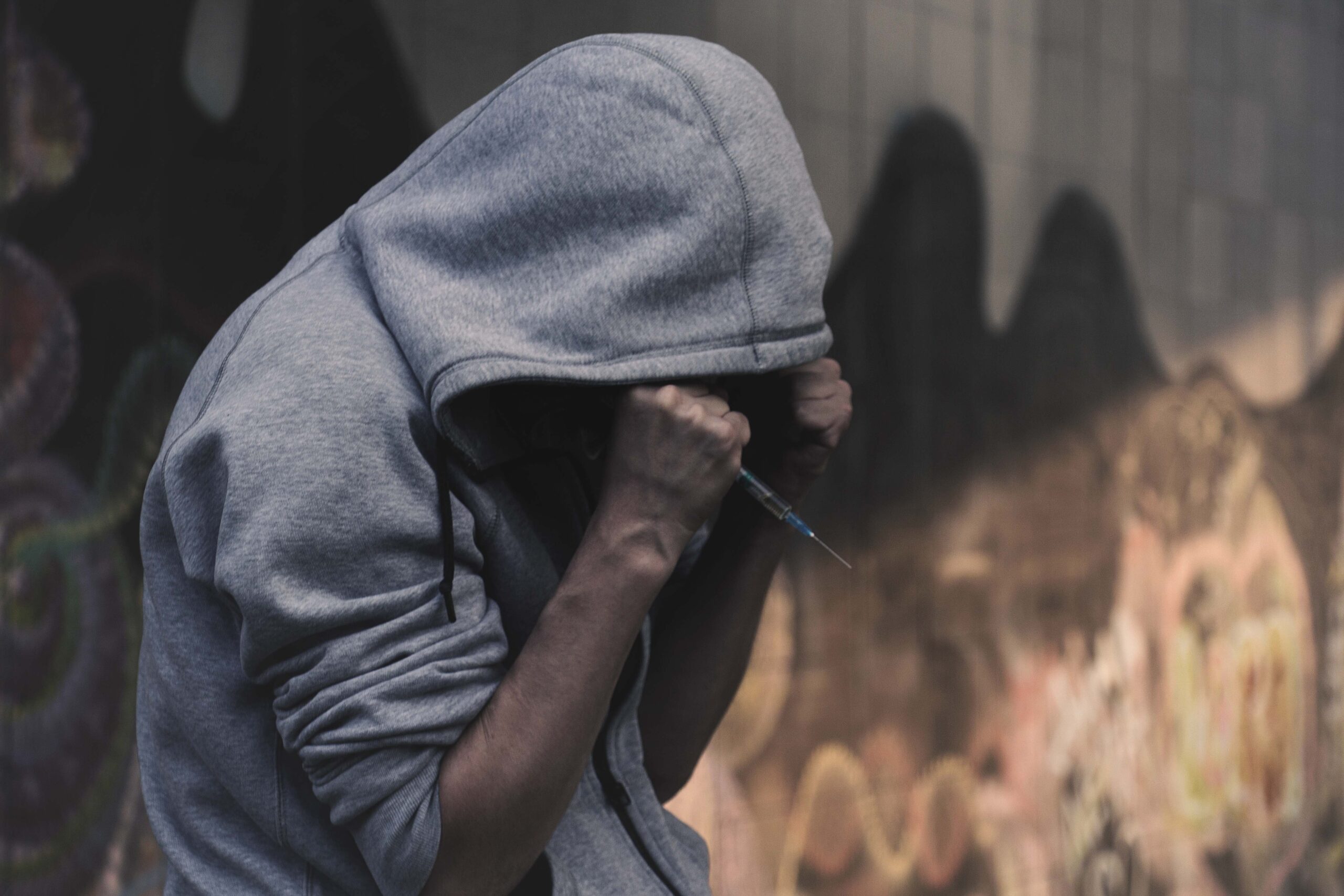
Image by Лечение Наркомании from Pixabay
Naloxone is a drug that reverts overdoses that PrevenCasa offers as part of its drug harm reduction program, which try to educate users to reduce consume and manage it to avoid overdoses. Everything which PrevenCasa offers come from international donations.
During the COVID pandemic the Mexico-U.S. border has been closed hampering Naloxone’s donations coming from the U.S. and Canada, said Alfonso. Such donations are crucial because of the Naloxone shortage in pharmacies. Buying Naloxone requires a medical prescription, which is burdensome for drug users and its price, about $20 USD per dose, makes it inaccessible, said Alfonso.
Injections of a dissolution made with water and salt are the alternative to Naloxone, as well as putting ice on the body and numerous slaps to the face.
Overdoses are not the only physical challenge of injectable drug users; they are also at high risk to get HIV and hepatitis C because they share syringes and have risky sexual practices. PrevenCasa offers sexually transmitted diseases (STD) tests and help users get treatment.
Although such efforts exist, health services are limited. “They (users) go to health centers and are not attended because they are drug consumers or were deported,” said Alfonso. “Having HIV treatment is complicated, […] they (clinics) ask for birth documentation, ID, while some users do not even know if they had birth certificates registered in Mexico or in the U.S.”
To obtain hepatitis C treatment, clinics demand users to enroll in an abstention program. Because of the lack of resources, hospitals cannot afford providing treatment to people that get infected recurrently, commented Alfonso.
HIV health centers are far away, and for someone with withdrawal syndrome to do a two-hour trip and wait in a clinic for attention, without consuming doses that they need every three hours or so, is an uphill battle. PrevenCasa provides transportation, companion and treatments’ shelter, explain Alfonso.
Sheltering of medicine is necessary because of the operation “police cleaning” in which the police go to the meeting points of people injecting drugs and burn their HIV medicine, syringes and other possessions. Among users there are people injecting others because not everyone knows how to do it. These people who are injecting the others are beaten over and over again with the purpose of closing such meetings.
PrevenCasa provides users with new syringes in order to avoid sharing them and propagate STDs. When this paraphernalia is burned by the police these efforts are useless.
However, there are also policemen with a different approach that help drug consumers improve their condition and get Naloxone.
Consumers start working about 3 a.m. recycling waste to make money to buy their first dose around 6 a.m. They then keep working all day cleaning cars, stores or in sexual work to be able to buy approximately five $2 USD-doses per day, relates Fleiz.
During the pandemic the Mexico – U.S. border closed reducing commercial activity in the area to the detriment of users that cannot make their usual income. No COVID symptoms have been noted among users since their previous health issues would cover any other new symptoms, explains Fleiz.
People consuming opioids at the border have been hidden by society, which has impeded developing timely interventions.
Visualizing their lives may be a first attempt to prevent people from starting, developing and finishing their lives in pain.