
Transforming hazardous emissions into a success story
By Elisa Nuñez Acosta
Disproportionate carbon dioxide emissions have sped up global warming and we are struggling with the consequent natural disasters. Visionary research could help transform the CO2 story into one of success.
The ugly face of carbon dioxide emissions

Ida, Elsa, Henri and Grace have a face in common, the face of devastation. These 2021-year hurricanes left thousands of people and children with their homes and schools in ruin. Cities were without electricity or a water supply. Streets were blocked with rubble and traffic lights destroyed. Damaging winds and severe flooding left passengers stranded in vehicles, and worse, killed people. These scenes raise the question of what is impacting the incidence of such natural disasters, and how science can help us tackle such a challenge.
The chain of facts that answer these questions is long but interconnected. Scientists have shown that global warming is changing the frequency and intensity of storms, which can precede hurricanes. Meanwhile, carbon dioxide emissions are the biggest contributors to such threatening warming.
Let’s talk about how a beneficial gas such as carbon dioxide becomes the villain of the story and how experts are trying to vindicate it. We will learn about one of the most fascinating findings that might help transform the CO2 story to one of success.
How did carbon dioxide become so dangerous?
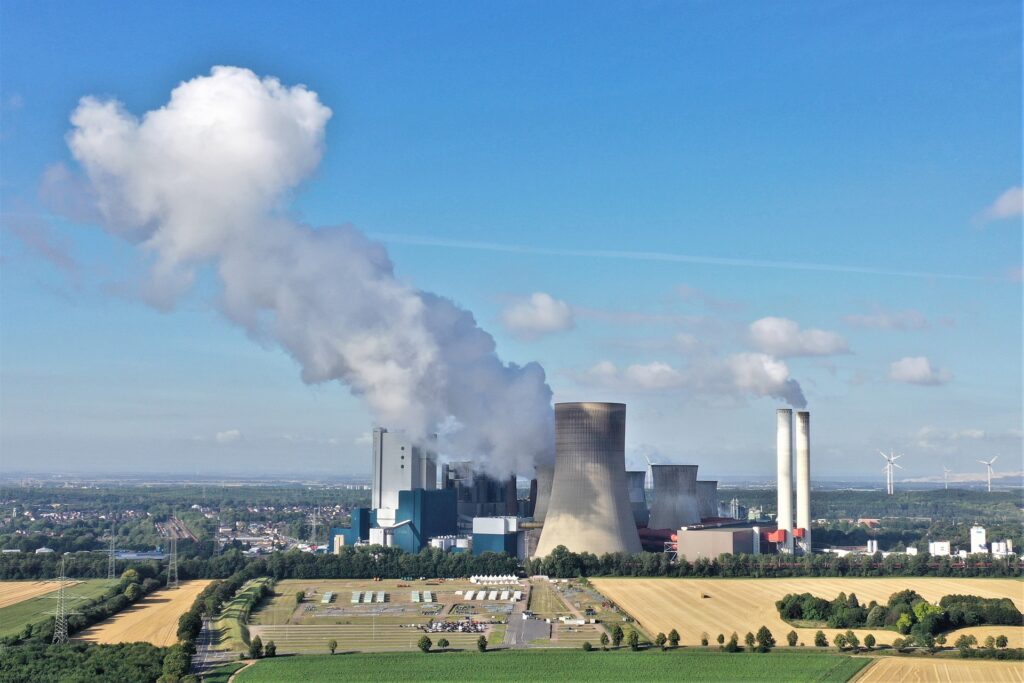
Greenhouse gases in normal and natural concentrations, such as methane, water vapor, nitrous oxide, and carbon dioxide help the Earth keep its surface warm enough to maintain life such as we know it.
The Earth warms with the sun’s rays and consequently emits heat. Greenhouse gases partially absorb such warmth, keeping our planet adequately warm.
Carbon dioxide has been a natural part of the terrestrial atmosphere since the Earth’s formation. It is part of a delicate balance between release and absorption. Live organisms release CO2 in different ways. For instance, humans and animals release CO2 by breathing. Once CO2 is in the air, plants, which need it to transform solar radiation in energy to live, absorb it. Oceans absorb another fraction of CO2 too.
How does such a beneficial gas become a threat to life on Earth, speeding devastating storms and calamitous floods? Since the Industrial Revolution, greenhouse gases, especially CO2, have been increasing disproportionately due to human activity, causing an inordinate increment in the Earth’s surface temperature. In particular, the use of fossil fuels for energy has raised CO2 emissions, breaking the fragile cycle of which CO2 was a part.
Excessive abundance of carbon dioxide in the atmosphere and its high capacity to absorb heat can make CO2 fatal. Once CO2 reaches the atmosphere it accumulates and remains there for thousands of years, overheating the Earth and putting it at risk. In 2019, 80% of all greenhouse gases corresponded to CO2 emissions from human activity in the U.S.
How long is this problem going to last? Carbon dioxide emissions have been rising and this trend will not change until we all cooperate in stopping this. During the first part of the 20th century, CO2 emissions doubled, while during the second half of the century, emissions increased four-fold. This gas is one of the greenhouse gases that has contributed to increasing the global temperature between 0.8 to 1.3 degrees Celsius since the late 19th century. Such a temperature change has been causing dangerous storms and impacting the environment, from deep in the ocean to the soil and atmosphere. Experts anticipate natural hazards happening as a consequence of such warming.
Carbon dioxide vindication
In the U.S. there are federal climate policies aimed at reducing greenhouse gases emissions and removing them from the atmosphere. The goal is to stop the increase of the temperature of the Earth’s surface and the consequent impact on our planet.
Human activity generates greenhouse gases mostly from transportation, commercial and residential activities, as well as from agriculture and industry.
Current policies are aimed at reducing emissions in such sectors, so the government provides incentives to reduce emissions and develop low-emission technologies. It also requires products or processes generate only a minimum amount of CO2. For instance, policies established a percentage of sustainable energy that an industry must incorporate into its processes. The use of energy sources such as wind or sun will help to accomplish those goals, but the availability of these kinds of energy sources is intermittent.
More recently researchers have been investigating how to transform CO2 in fuel as an alternative to mitigate air contaminants and to develop new sources of sustainable energy.
New findings may reshape hazardous emissions’ history

Currently there are energy sources that are more or less sustainable. For example, production of hydrogen to use as a fuel is well-developed, but the generation of contaminants, such as CO2 during the process surpasses the benefits of using hydrogen to generate energy.
There are no contaminant-free processes to produce energy, but researchers are looking for new ones that are more sustainable. For instance, chemical conversion of CO2 into methane is gaining attention. This process not only generates methane, which is a gas widely used to produce electricity and heat, but it also significantly reduces the CO2 emitted to create an energy source.
Some methods that are able to transform CO2 into methane involve electrocatalytic processes. They are called electrochemical because they use an electrical current to make the process flow. And they are catalytic because they use a catalyst, usually a metal, to speed up the reaction. Some other methods able to transform CO2 additionally use visible light, such as sunlight, so that they are called photoelectrocatalytic processes. The processes that convert CO2 are low energy consumers and highly efficient in their rate of conversion compared to other types of procedures. This technology is far from being new. Dr. Julien Bonin from Université de Paris, France, commented in an interview that scientists published the first findings in this field in the late 70’s and early 80’s. At that point it was not appealing to speed up the development of this technology, said Bonin, “since oil was cheap, who cared about [using] CO2 [as an energy source]?” “[…] the big environmental question was the hole in the ozone layer, [so that] CO2 was not identified as a problem!”
Scientists used to employ precious metals to improve such chemical processes. These metals were not abundant on the Earth and were expensive. More recently, researchers have been using abundant, non-toxic and cheaper materials, as well as procedures that need less energy. All these improvements together have made CO2 conversion more sustainable, explained Bonin.
Bonin’s team has recently transformed CO2 into methane which can be used as fuel. Carbon dioxide molecules are very stable which means that it takes a lot of energy to break them down. The team succeeded in doing this by using a catalyst containing iron that speeds up the CO2 reaction. Iron is abundant in the Earth’s crust, is non-toxic and cheap. The researchers performed such a process at moderate temperature and pressure conditions and used only visible light to trigger the reaction. The team was the first to obtain methane from such a conversion.
Methane, massively used to generate electricity and heat, comes from oil through a demandingly energetic and highly contaminant process. Bonin team’s technology would obtain methane through a more environmentally friendly procedure. This finding was published in Nature in August 2017.

The feasibility of applying this kind of technology on a large scale and how long its implementation would take depends on governmental regulations and the money that companies would be able to invest in it, said Bonin.
These photocatalytic methods are growing. More recently a group of researchers from China, led by Professor Shien Guo from Institute of Advanced Materials, Jiangxi Normal University, developed a new material able to adsorb CO2 and convert it into carbon monoxide and methane. This process uses palladium to speed the reaction up, which is much more expensive than iron used by Bonin’s team, and it also uses visible light to trigger the reaction. Dissimilar to Bonin’s method, the Chinese system can be re-used through many cycles to generate methane, observed Bonin.
Current methods still have areas of opportunity to improve. For example, Bonin explained that they are still exploring new alternatives to introduce cheaper materials that might make it more feasible to develop the process on a large scale.
The methods performed in laboratory conditions have advantages and disadvantages in terms of costs, sustainability, and large-scale implementation. Bringing them to a large scale would open new caveats and benefits. For example, these processes use pure CO2 in laboratory conditions. Transforming CO2 on a large-scale should overcome a previous step, which is capturing CO2 from air. The current options to capture CO2 from air still need improvement. So far they are not efficient enough or are inaccessibly expensive.
How promising is the conversion of CO2 into methane in the long-term? “It is difficult to predict in which direction CO2 conversion will go, because all options [to transform it] are on the table, but with very different levels of maturity. But who knows if a decisive discovery is for tomorrow?” Bonin said.
The end of this story is a work in progress.